Getting Started with Snooz
The goal of this document is to detail how to download, install and launch Snooz.
Note
CÉAMS members if you need access to the Snooz Toolbox, which supports reading NATUS PSG files (version 9.1), please send an email to snooztoolbox.cnmtl@ssss.gouv.qc.ca—we’ll be happy to assist!
System Compatibility and Requirements for Snooz
Windows
Snooz has been developed and validated exclusively on Windows 11.
macOS
Snooz is compatible only with Macs featuring the T2 security chip on Intel processors.
It is not supported on Macs with M1 or newer Apple Silicon processors.
Snooz is compatible with macOS versions 14.3 (Sonoma) through 15.2 (Sequoia).
Linux
Snooz has been developed and validated on Ubuntu 22.04 LTS and should be compatible with Ubuntu 24.04 LTS.
First Snooz installation
The link to download the Snooz installer is provided by email. To request it, please visit https://snooztoolbox.com/ and fill out the form in the Download section, then submit it.
On Windows platforms
Download the Installer using the link provided in the Snooz email after submitting your profile.
Double click on the zip file downloaded.
Double click on the SnoozSetup.exe included in the zip file.
Follow the instructions (make sure the previous version of Snooz is closed).
Warning
Snooz is not signed yet! If you get this warning below :
Click on More info.
Select Run anyway.
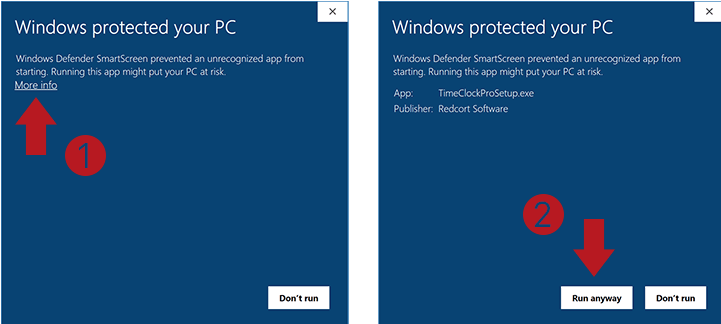
The installation may take a few seconds. When the installation is complete click “Next” to finish the install. Click “Finish”. You are done!
If you encounter issues, see the requirements in System Compatibility and Requirements for Snooz.
On macOS platforms
Download the Installer using the link provided in the Snooz email after submitting your profile.
Double-click on the downloaded file to install.
Drag and drop the Snooz application in the Applications folder.
Since Snooz is not signed yet, you need to mark it as an exception (see the note lower).
To launch Snooz type the following in the terminal:
/Applications/Snooz.app/Contents/MacOS/Snooz
Note
- To mark Snooz as an exception:
- Open a terminal and type either :
find /Applications/Snooz.app -exec xattr -c {} \;orxattr -cr /Applications/Snooz.app, depending on your environment.
Warning
Ensure that Snooz has full disk access to launch it from the Launchpad by following these steps:
Open System Settings.
Navigate to Privacy & Security.
Click on Full Disk Access.
If Snooz is not listed, click the + (plus) icon, then select Snooz from the Applications folder.
Click Quit & Reopen when prompted.
Relaunch Snooz.
If Snooz does not have full disk access, it may hang when loading a file chosen via the Snooz interface. Launching Snooz from the terminal provides broader disk access than the Launchpad, so using the terminal is recommended if you prefer not to change the settings.
If you encounter issues, see the requirements in System Compatibility and Requirements for Snooz.
On Linux platforms
Download the Installer using the link provided in the Snooz email after submitting your profile.
Install Snooz.
Open the installer via the Ubuntu software center or Software install and click install
or install Snooz via the terminal :
sudo dpkg -i SnoozSetup.deb
Note
Use the filename of the .deb file you have downloaded.
If you encounter issues, see the requirements in System Compatibility and Requirements for Snooz.
Launch Snooz
On Windows platforms
Type Snooz in the Windows Search.
On MAC platforms
Use Finder to locate Snooz in Applications.
On Linux platforms
From the Applications -> Snooz
Update Snooz from the interface
Launch the Snooz application already installed on your desktop.
Navigate to the menu Help > About Snooz (macOS : Snooz > About Snooz)
If the installed version is older than the released version download Snooz for your OS.
Close Snooz to avoid errors during the installation.
(Optional) You can uninstall the previous version of Snooz to delete obsolete packages.
Run the installer.
After installation, launch the new version of Snooz.
Activate the latest version of the packages you are interested in. Navigate to File > Settings > Packages (macOS Snooz > Preferences > Packages) in Snooz. Check/uncheck the right versions.
To activate only the most recent version of the packages installed with Snooz, you can press Reset to default in the General Settings.
Warning
CÉAMS members if you need an update for the Snooz Toolbox, which supports reading NATUS PSG files (version 9.1), please send an email to snooztoolbox.cnmtl@ssss.gouv.qc.ca—we’ll be happy to assist!